Introduction – When Memories Fade but Emotions Remain
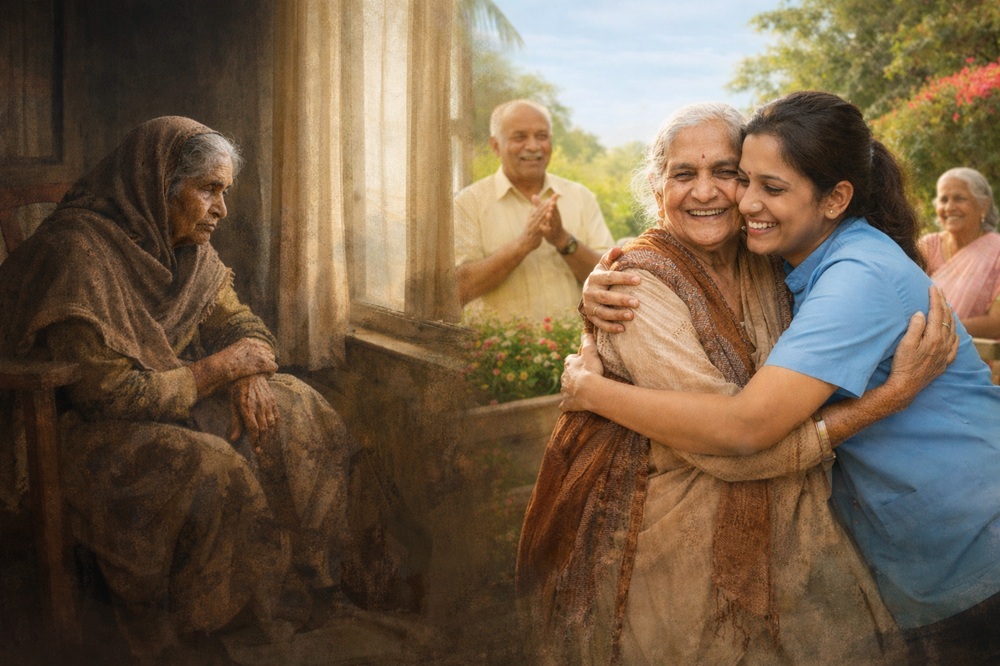
Dementia may blur memories, but it rarely erases emotions. And sometimes, when conversations no longer flow and names are forgotten, a simple bhajan can light up the room. Dementia is not a single disease but a syndrome that affects memory, thinking, and behavior. Conditions like Alzheimer’s disease gradually change how a person communicates and connects.
Families often say, “They don’t talk much anymore,” or “They don’t respond.” But , what most miss out is that maybe they are not responding because the medium we are choosing can be wrong. A simple change and bit of effort to understand what connects with emotionally and instantly , can help devise new ways of communication and connection.
The Emotional Power of Familiar Devotional Music
Very often, people with dementia fall in the older bracket of age, a group of people who have strong devotional instinct and keen interest in music and bhajan. Introduce a familiar devotional song, something they grew up hearing every morning and suddenly you observe that their lips move, hands tap to rhythm, eyes soften. This is the power of rhythm, sound and vibrations.
Why Music Still Works in Dementia
Music is processed in multiple areas of the brain, including those linked to emotion and long-term memory. Even when cognitive functions decline, musical memory can still stay intact. Devotional music, especially bhajans, carries deep emotional and cultural meaning. For them, it’s not just another sound but a time capsule. It’s a medium that taps onto their emotions, past memories and belongingness.
Psychological and Emotional Benefits of Bhajans
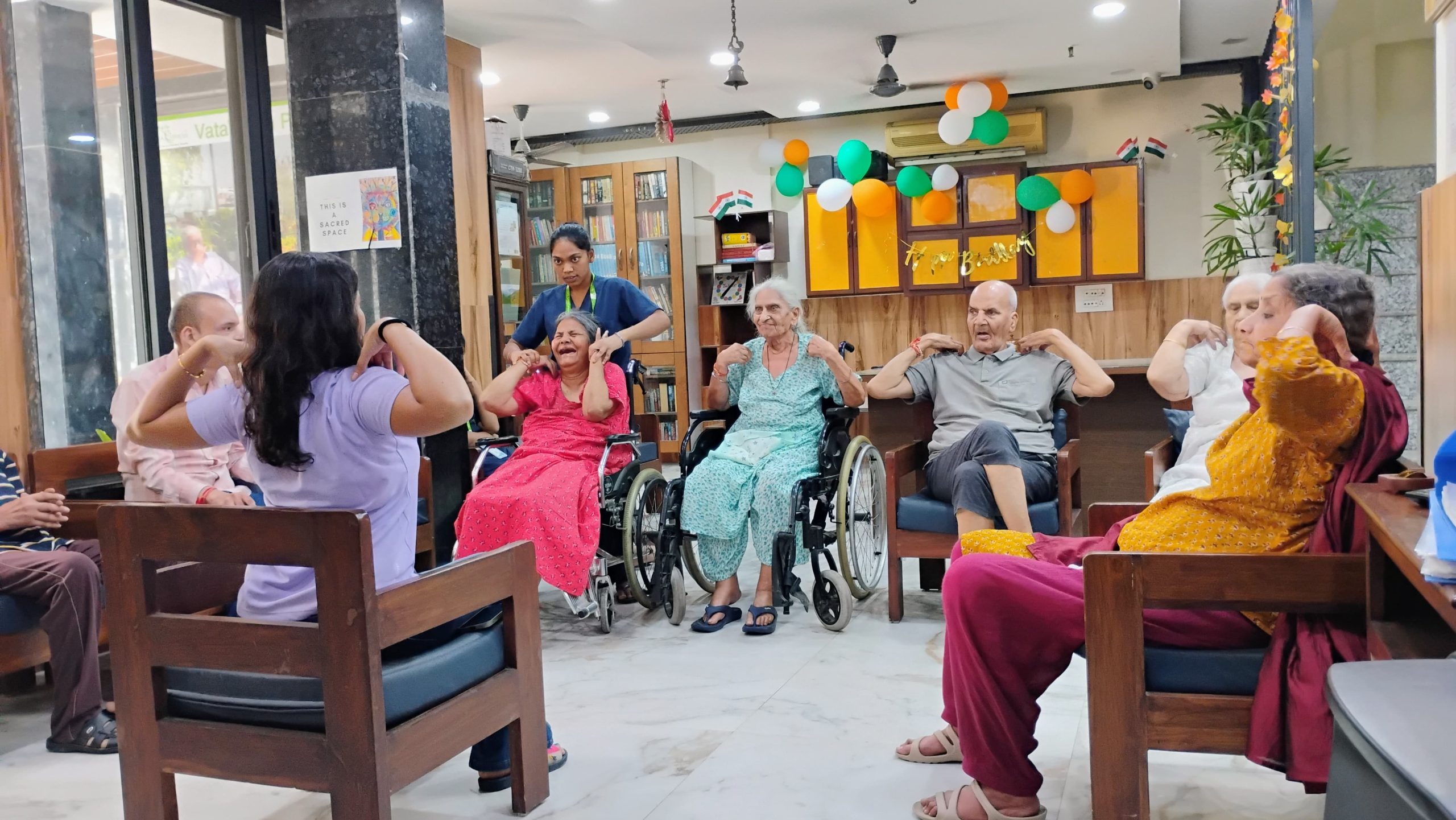
Music also reduces agitation and anxiety. It provides structure and comfort. Group singing can foster social bonding, reducing isolation. Bhajans, in particular, add another layer of spirituality. Singing a devotional song may evoke a sense of safety, feeling of being grounded, and peace. For many older adults, spirituality has been a lifelong coping mechanism, and reconnecting with it can feel grounding. From a psychological perspective, this holds great importance. Music/bhajan , which they have grown up with, rejoiced with others and even taught others are deeply embedded somewhere within themselves. Probing this helps people with dementia to connect deeply with oneself, gain awareness about the lost memories and via this find their way back to the present.
Music as a Tool for Meaningful Dementia Care
Dementia care is not only about medication but about dignity, warmth, and meaningful engagement. Music does not cure dementia but it can momentarily restore something just as powerful: connection.
Conclusion – Rediscovering Connection Through Music
When going back feels tough and when being in the present is not enough , finding a way to merge both can be cathartic. This is exactly what Music and bhajans can serve to do in light of people with dementia. Dementia doesn’t mean that all the doors are closed, it just means rerouting is required. When we fail to connect and communicate with them, music and bhajan can be our source to fill that gap. We can begin by identifying the melody that connects with them or signifies something close to them. This can be followed by slowly incorporating it into their routine , noticing their subtle reactions to the same and building upon this success. Sounds and Vibrations hold deep power and utilising it mindfully can help bring magnificent changes in the lives of people we care.
– Pranjali Johar
Intern, VataVriksh Parent Care
Psychology Student, Kamala Nehru College, University of Delhi