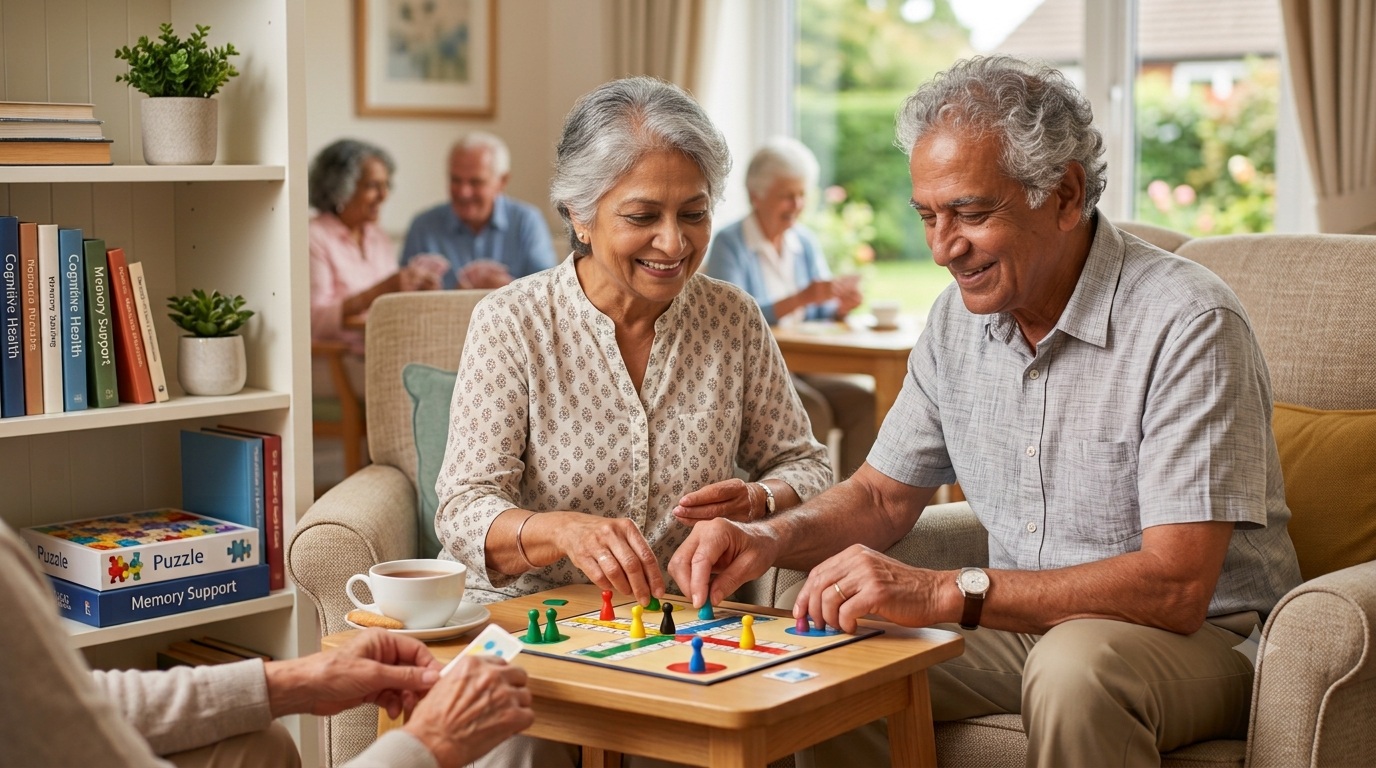
Living with Dementia in India: City vs Village Life
What does dementia look like when the person lives in a village? And does the experience change when the same condition is experienced in a busy city?
The answer is not simply about the availability of hospitals or the number of people living around an older adult. Dementia is experienced within a social environment—and in India, that environment can look very different across rural and urban communities.
Imagine an older adult in a rural community who spends the day talking with grandchildren, helping with household work, meeting neighbours and following familiar routines. Now imagine another older adult living in an urban apartment, where healthcare may be easier to reach but family members may be away at work for most of the day.
Both may be living with dementia. But their everyday experiences may be very different.
Dementia in India: More Than Memory Loss
Dementia is not a normal part of ageing. It is a group of conditions that can affect memory, thinking, communication, behaviour and the ability to manage everyday activities.
Research using data from the Longitudinal Ageing Study in India (LASI, 2020) estimated dementia prevalence among adults aged 60 years and above at about 7.4%, or approximately 8.8 million people. The same research found differences between rural and urban populations, with a higher estimated prevalence in rural areas.
But prevalence is only one part of the story. What happens after symptoms appear—and how families understand, respond to and support the person—can shape the lived experience of dementia.
Rural India: When Community Can Become a Strength
Rural communities are often associated with extended families, familiar neighbours and long-standing community relationships.
An older adult may continue to participate in everyday life through household work, farming-related activities, caring for grandchildren, attending local gatherings or simply spending time with familiar people. These activities can provide routine, social interaction and a sense of being useful.
Intergenerational relationships can be especially meaningful. Grandchildren may provide companionship, while older adults may continue to feel connected through family responsibilities.
Could these everyday interactions matter for a person living with dementia?
They can support emotional wellbeing, familiarity and quality of life. Meaningful activity and social engagement can help a person remain involved in everyday life. However, they should not be presented as a cure for dementia or as something that reverses the disease.
Being Surrounded by People Does Not Always Mean Being Connected
This is where the rural–urban comparison becomes more complicated.
A person can live in a joint family and still feel lonely. Family members may be physically present but busy with work, household responsibilities or caregiving. The migration of younger family members can also change traditional patterns of support.
So, perhaps the better question is not: ‘How many people are around the older adult?’
It is: ‘How meaningful is the person’s interaction with those people?’
The Awareness Gap
One major challenge can be recognising dementia in the first place.
Repeated questions, forgetting familiar places, difficulty managing everyday tasks or changes in behaviour may sometimes be dismissed as ‘old age’. When symptoms are normalised, professional assessment may be delayed.
This can create a chain of problems: symptoms may go unrecognised, families may not seek assessment, and opportunities for early support and planning may be missed.
Awareness, therefore, is not just about knowing the word ‘dementia’. It is about recognising when a change is more than ordinary ageing and knowing where to seek help.
Urban India: Healthcare May Be Closer, But Connection Can Be Different
Urban communities may provide greater access to hospitals, specialists, diagnostic services and other formal healthcare facilities. For some families, this can make assessment and treatment easier to access.
But urban living can also create a different kind of challenge.
Nuclear families, demanding work schedules, migration for employment and reduced interaction with neighbours can leave some older adults with fewer opportunities for everyday social contact.
An older adult may live in a crowded city and still spend most of the day alone.
This reminds us of an important distinction: physical presence is not the same as meaningful social engagement.
The Urban Advantage Is Not the Same for Everyone
Having a hospital nearby does not automatically mean that a person will receive a timely diagnosis. Cost, transportation, waiting times, family availability, awareness and the availability of dementia-specific services can still create barriers.
Similarly, greater awareness in urban settings does not guarantee that families will understand dementia accurately. Stigma, fear, financial concerns and misconceptions can exist in both rural and urban communities.
Family Structure: Support and Strain
Family can be one of the most important sources of support for a person living with dementia. At the same time, dementia can place considerable emotional, practical and financial pressure on caregivers.
In a multigenerational household, caregiving responsibilities may be shared across several family members. In a nuclear family, fewer people may be available to provide day-to-day support.
Neither structure is automatically better.
What matters is whether the person receives consistent, respectful and person-centred support—and whether caregivers themselves receive support.
What About Socialisation?
Socialisation is not simply about keeping an older adult busy. Meaningful interaction can support emotional wellbeing, reduce feelings of isolation and help preserve a sense of identity and belonging.
For someone living with dementia, familiar social environments can also provide comfort. A conversation with a grandchild, helping with a simple household activity, attending a familiar community gathering, listening to music or spending time with neighbours may be more meaningful than simply being surrounded by people.
At the same time, social engagement should not be described as a treatment that stops dementia from progressing. Its value lies primarily in supporting wellbeing, participation and quality of life.
So, Is the Experience Really Different?
Yes—but not in a simple ‘rural is better’ or ‘urban is better’ way.
Rural settings may offer stronger familiarity, intergenerational contact and opportunities for everyday roles, while facing challenges related to awareness, diagnosis, specialist access and transport.
Urban settings may offer better access to formal healthcare and information, while some older adults may face loneliness, nuclear family structures and reduced community interaction.
And these patterns are not universal. Rural and urban communities are both diverse. Education, income, gender, family relationships, living arrangements and local healthcare resources can all change the experience.
Rural and Urban Communities: A Different Set of Challenges
| Rural communities | Urban communities |
| Intergenerational and community interaction may be more available | Formal healthcare and specialist services may be more accessible |
| Older adults may remain involved in household or community roles | Older adults may have fewer everyday interactions because of work and nuclear-family routines |
| Familiar surroundings may support comfort and routine | Fast-paced lifestyles and changing family structures may contribute to isolation |
| Awareness and recognition of dementia may be limited in some communities | Greater awareness does not always translate into timely or affordable care |
| Transport and specialist access can be barriers | Cost, time, caregiver availability and fragmented support can remain barriers |
What Can Communities Do Better?
Instead of asking which setting is better, perhaps we should ask what both settings can learn from each other.
- Improve awareness of dementia and the difference between dementia and normal ageing.
- Strengthen early recognition, referral and access to assessment.
- Create opportunities for meaningful social participation for older adults.
- Support caregivers with practical information and emotional support.
- Promote dementia-friendly community spaces where older adults can participate safely.
- Make information and services accessible in local languages and culturally familiar formats.
- Treat the person—not only the diagnosis—with dignity, choice and respect.
Beyond the Rural–Urban Divide
The experience of dementia is shaped by much more than geography.
It is shaped by family, community, awareness, healthcare access, financial resources, education, social participation and the way society understands ageing and dementia.
A rural older adult may have many people around them but limited access to diagnosis.
An urban older adult may have a hospital nearby but experience loneliness at home.
So perhaps the most useful question is not, ‘Is dementia worse in rural or urban India?’
The better question may be:
How can we make every community—rural or urban—a place where people living with dementia can remain connected, respected and supported?
Because dementia may change a person’s abilities, but it should never make them invisible.
A Note from VataVriksh Parent Care: Bridging the Gap for Every Senior
At VataVriksh Parent Care, this question lies at the heart of everything we do across Gurgaon and Delhi-NCR, India. Whether an older adult is navigating life in a quiet village or inside a high-rise city apartment, their core need remains unchanged: to be seen, valued, and genuinely connected.
Urban living often promises proximity to top-tier healthcare, yet too many families find themselves overwhelmed by the day-to-day emotional and physical realities of dementia care in a fast-paced environment. The missing piece in many modern setups isn’t medical access—it is meaningful engagement, structure, and a compassionate ecosystem that supports both the senior and their family caregivers.
We believe that no family should have to choose between clinical accessibility and warm, human connection. By blending person-centered care routines, specialized cognitive engagement, and a supportive community environment, we aim to bridge the rural-urban divide. Our mission is to ensure that elders living with dementia retain their sense of dignity, identity, and belonging—every single day.
Looking for Compassionate Care for Elderly Parents?
If you or your loved ones are seeking a safe, nurturing, and dignified environment for elderly parents, VataVriksh Parent Care is here to help.
- Explore our Parent Care services
- Explore Day Care for Dementia Patients
- Schedule a visit or consultation
- Let VataVriksh Parent Care help your parents rediscover comfort, care, and peace
Written by:

Chahak
Intern, VataVriksh Parent Care
Clinical Psychology Student, Amity University, Gurugram, Haryana, IN
About Author:
Chahak is a dedicated Clinical Psychology student with a keen interest in mental well-being and continuous learning. She believes in empathy, curiosity, and using psychology to create meaningful change.
Reviewed and Edited by:
Dr Subodh Kumar