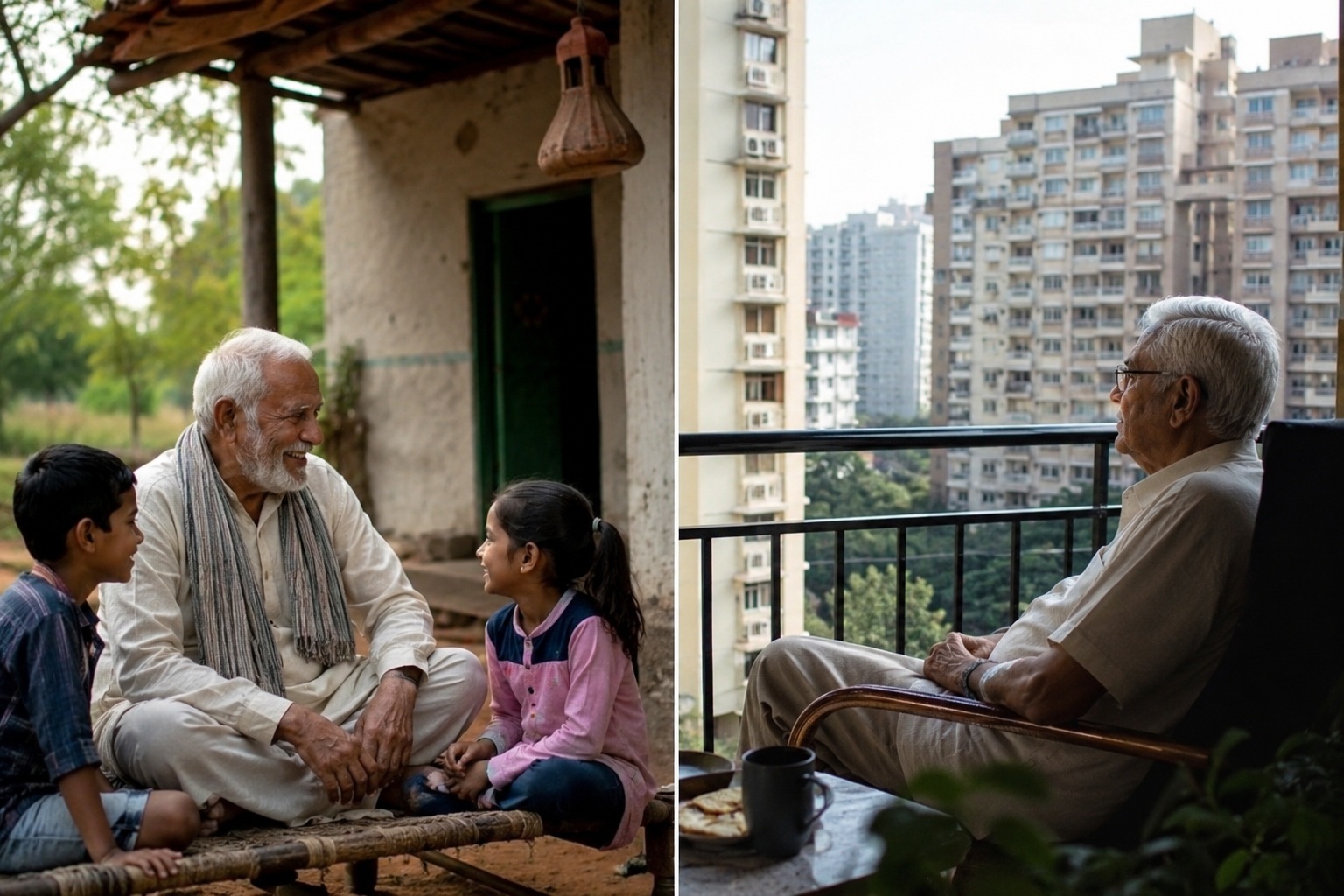
Different Addresses, Different Realities, Same Love for Parents
The world has become smaller, but families have become geographically larger.
Today, many Indian families have one child living with elderly parents (seniors) in India while another child lives abroad. Both children deeply care for their parents. Both want the best for them. Yet, when decisions about elder care, home care, assisted living, or healthcare support arise, disagreements often emerge.
At VataVriksh Parent Care, after interacting with thousands of family members and caregivers, we have observed that most conflicts are not caused by a lack of love. They are caused by different lived experiences.
The Reality of the Child Living with Elderly Parents
The child living nearby experiences ageing and caregiving every day.
They witness:
- Medication management
- Doctor appointments
- Hospital admissions
- Falls and emergencies
- Sleep disturbances
- Mobility challenges
- Memory decline
- Emotional dependency
- Behavioural changes
- Caregiver exhaustion
Many family caregivers silently struggle with physical fatigue and emotional burnout.
Some even feel hurt when their efforts are compared only with financial contributions made by siblings living abroad.
Common feelings include:
- “Nobody understands what I handle every day.”
- “Caregiving is much more than paying bills.”
- “I have sacrificed my personal life, career, and social activities.”
- “My sibling only sees a small part of the reality.”
These feelings are genuine and deserve recognition.
The Reality of the Child Living Abroad
Distance creates a different kind of burden.
Children living overseas often experience:
- Constant worry
- Guilt for not being physically present
- Anxiety during medical emergencies
- Fear of receiving late-night phone calls
- Dependence on updates from siblings
- Uncertainty about parents’ safety
Many contribute financially and feel frustrated when they cannot directly monitor how care is being delivered.
Common thoughts include:
- “I wish I could do more.”
- “I worry every day.”
- “I feel helpless.”
- “Are my parents receiving proper care?”
Their emotional stress is equally real.
Why Do Siblings Start Disagreeing?
Problems usually begin when different realities create different perceptions.
The sibling in India often sees the daily struggle.
The sibling abroad often sees opportunities for improvement through professional services, technology, and structured care systems.
Neither side is wrong.
Both are responding to the reality they experience.
Unfortunately, misunderstandings can lead to:
- Family conflict
- Resentment
- Blame
- Delayed decisions
- Increased stress for elderly parents (seniors)
The Most Important Question
Instead of asking:
“Who is doing more?”
Families should ask:
“What will improve the quality of life of our parents?”
This shift changes the conversation from competition to collaboration.
How Families Can Work Together
Successful families often:
- Schedule regular family discussions
- Share caregiving responsibilities
- Respect each other’s challenges
- Focus on parents’ needs rather than personal opinions
- Seek professional guidance when required
Most importantly, they acknowledge that both proximity and distance create unique caregiving burdens.
How VataVriksh Parent Care Helps Families
At VataVriksh Parent Care, we frequently support families where children live across different countries and time zones.
Our role is not to replace family involvement.
Our role is to strengthen care by providing:
- Professional healthcare monitoring
- Assisted living support
- Companionship
- Daily activity programs
- Safety supervision
- Family communication support
When families focus on solutions instead of disagreements, elderly parents (seniors) benefit the most.
Final Thoughts
Caregiving is not a competition between siblings.
One child may carry the burden of daily responsibilities. Another may carry the burden of distance and helplessness. Both are expressions of love.
The goal should never be proving who cares more.
The goal should always be ensuring that elderly parents (seniors) age with dignity, comfort, safety, and happiness.
Read Next: Caregiver Burnout in Indian Families: The Silent Crisis Nobody Talks About
Written by:

Dr Ramesh Goyal
(M.B.B.S, MD, PGD Developmental Neurology)
Certified Senior Care Expert (USA)
View Profile