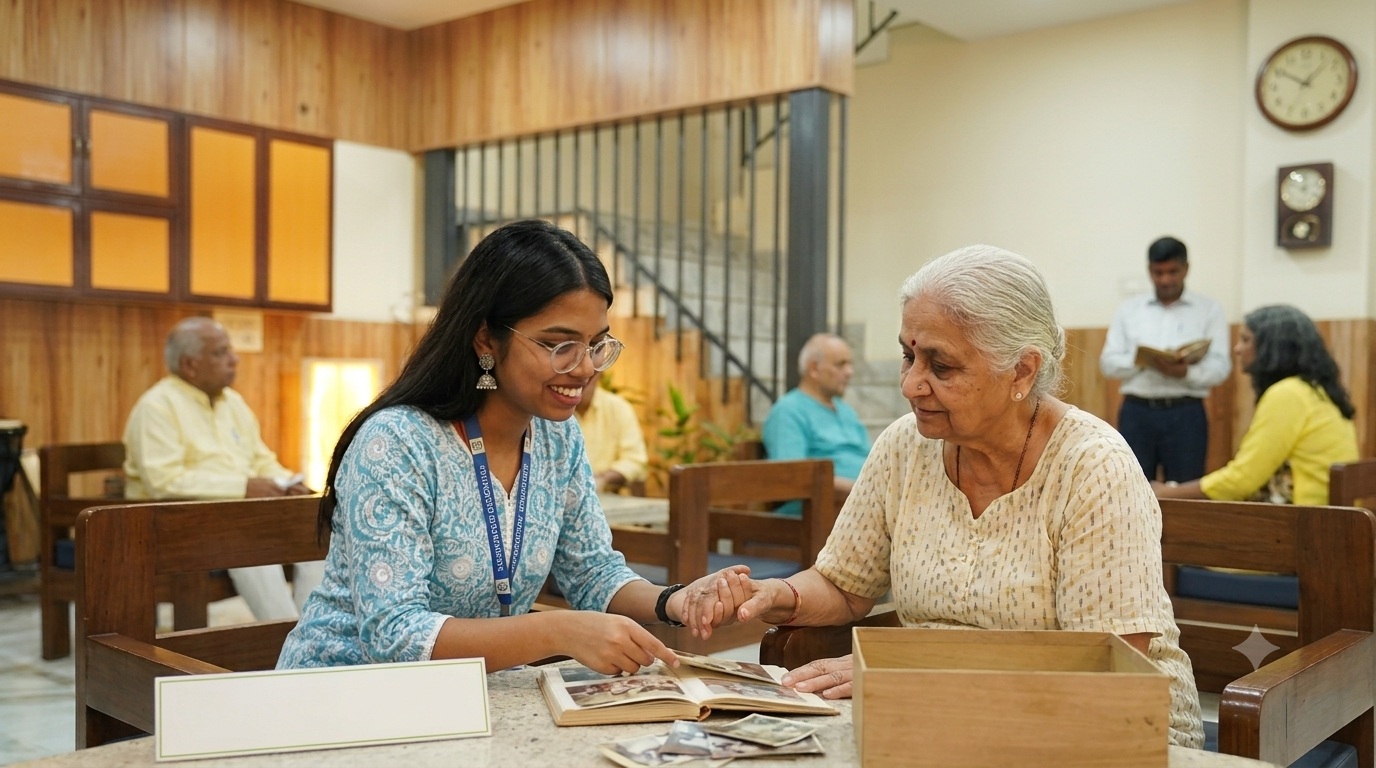
I recently concluded my psychology internship at VataVriksh Parent Care, an experience that has profoundly shaped my understanding of memory care. In my university classes, dementia is often presented as a list of clinical symptoms in a textbook. In reality, it is much more complex, but also filled with much more hope than I initially realized.
VataVriksh is not designed like a typical hospital ward. It is an assisted-living community, meaning the focus goes beyond just medical care. The primary goal is to keep residents actively engaged in a supportive, and holistic environment.
 My daily responsibilities were quite different from what I expected. I spent time conducting activities – guiding residents through block puzzles, practicing with flashcards, and coming up with group stories. While it felt like we were simply spending quality time together, these activities were part of structured cognitive rehabilitation. The objective was to keep the brain working and stimulated. It sounds simple, but I was able to see the clinical data firsthand. There was an 84-year-old resident who followed this routine, alongside yoga and physical therapy, for five months. Her memory test score improved significantly. That remarkable progress showed me that we can actively push back against cognitive decline.
Getting to know the residents was undoubtedly the most rewarding part of the entire experience. You learn very quickly that even when memory begins to fade, a person’s core personality remains. They are incredibly affectionate and genuinely funny. Another resident, for instance, found so much pride and joy just in getting his daily flashcards right. Another Aunty might forget recent events, but she still has a solid grasp of basic economics and enjoys discussing it. And one Aunty taught me that even when facts slip away, the capacity to love remains completely intact. Her warmth and emotional memory were always present, and the residents truly made you feel welcome.
The more difficult aspect of the internship was seeing what the families go through. In India, there is a deep cultural expectation to perform seva and care for our parents at home, no matter the circumstances. Because of this, families often try to manage everything on their own until they are completely exhausted. I saw caregivers who were experiencing severe burnout but felt too guilty to ask for assistance. A significant part of this journey was realizing how important it is to help families understand that seeking professional care is not abandoning their loved ones; it is ensuring they get the best support possible.
Balancing my college studies with the emotional weight of this internship was demanding, but it has been the most meaningful work I have done so far. It took the psychology theories out of my textbooks and brought them to life, proving that effective care requires patience and empathy alongside science. This experience has made me certain that I want to dedicate my future to pursuing research-focused postgraduate studies in cognitive neuropsychology.
Written by:
Anoushka Sharma
Psychology Intern, VataVriksh Parent Care
Psychology Student, Kamala Nehru College, University of Delhi
About the Author

Anoushka Sharma, a Psychology Honours student at Kamala Nehru College, University of Delhi. She is currently an Intern at VataVriksh Parent Care. A trained Kathak dancer and an empathetic individual. She loves combining her creative side with her interest in the human brain. She is currently working towards a Master’s in Cognitive Neuropsychology and learning how to make healthcare feel a little more human.
FAQs
What do psychology interns do at VataVriksh Parent Care?
Psychology interns at VataVriksh Parent Care engage in cognitive rehabilitation activities, memory care support, group sessions, and resident interaction to better understand dementia and elderly care.
How does cognitive rehabilitation help dementia patients?
Cognitive rehabilitation includes structured activities like puzzles, flashcards, storytelling, and therapy exercises that help maintain brain stimulation and slow cognitive decline.
Why is professional dementia care important?
Professional dementia care provides structured support, medical supervision, emotional wellbeing, and caregiver relief while ensuring better quality of life for elderly parents (seniors).
What makes VataVriksh Parent Care different?
VataVriksh Parent Care offers a holistic assisted-living environment focused on cognitive wellness, emotional support, physical health, and community engagement.